

CRUST – Part 2
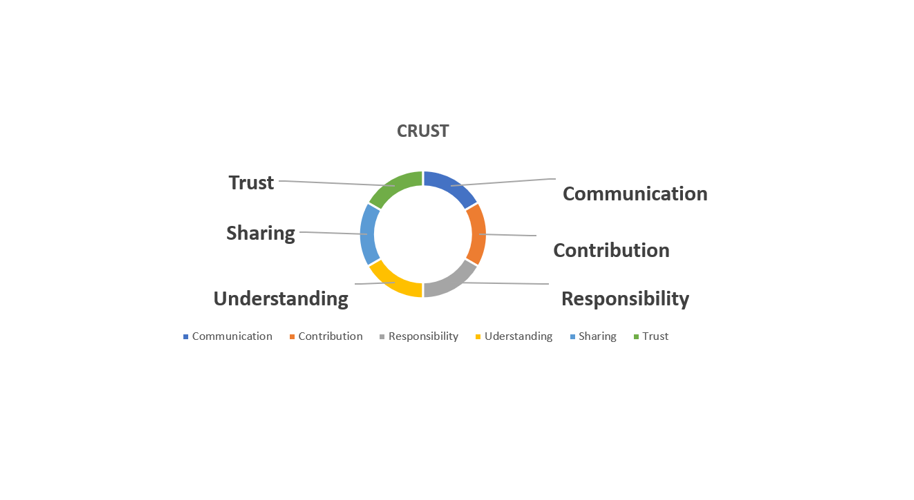
Family-owned businesses are unique ecosystems where emotions, relationships, and financial interests intersect. Through years of working closely with such businesses, we have identified six core values that consistently shape their long-term success. Together, these values form the framework we call CRUST:
Contribution & Responsibility
Family-owned businesses thrive not only on financial strength or business strategy, but also on the values that bind the family together across generations. In Part 1 of the CRUST series, we explored the importance of Communication. In this part, we focus on two equally critical pillars of long-term family business success: Contribution and Responsibility.
Both values influence how family members participate, collaborate, and take ownership within the family enterprise. When these values are deeply ingrained, they create alignment, accountability, and continuity.
Contribution: Every Member Matters
What does contribution truly mean in a family business?
Is it limited to contributing financially?
Is it about participating in day-to-day operations?
Does it include ideas, perspectives, support, and guidance?
In reality, contribution in a family business includes all of these and much more.
At its core, contribution begins with ownership, not merely legal ownership, but emotional ownership. Every family member, irrespective of role or designation, contributes to the larger success of the family and the business.
In most family businesses, responsibilities and functions are divided among members. Each individual is expected to perform their role with sincerity and commitment. However, contribution is not simply about completing assigned tasks. It is about willingly participating in the collective vision of the family enterprise.
The Team Sport Analogy-
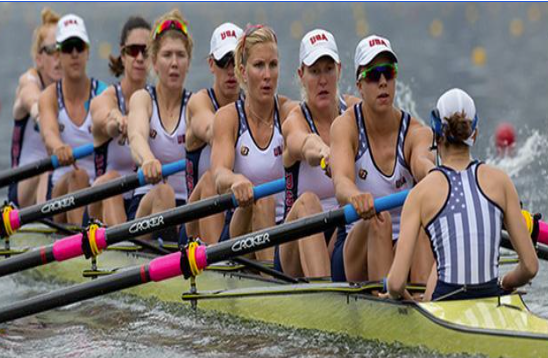
A family business functions much like a team sport.
Whether it is football, cricket, or hockey, every player has a role to perform. The success of the team depends not on one individual, but on the collective contribution of all its members. Even if one player underperforms or disengages, the overall performance of the team suffers.
At different moments, different players may shine. Yet even those who are not in the spotlight continue to contribute towards the team’s success.
Similarly, in a family business:
There may be one leader or captain.
There may be different areas of expertise.
There may be varying levels of visibility.
But the success belongs to the entire family, not just one individual.
A sustainable family business is built when individuals prioritise collective success over personal recognition.
The Importance of Clarity in Roles-
One of the common causes of tension in family businesses is the lack of clearly defined roles and responsibilities.
When roles overlap excessively:
Confusion increases
Decision-making slows down
Conflicts emerge
Opportunities are often missed
Contribution becomes far more effective when family members understand:
What is expected from them
Where they can add value
How their efforts contribute to the larger vision
Most importantly, contribution should come voluntarily. Forced participation rarely creates long-term commitment or alignment.
The Symphony of a Family Business
A successful family business resembles a well-coordinated orchestra.
Every musician plays a different instrument, yet all work in harmony under the guidance of a conductor. The beauty of the symphony comes not from one individual, but from everyone performing their role at the right time and in the right manner.
Similarly, when family members contribute wholeheartedly while trusting the leadership and the process, the business functions with greater harmony, stability, and strength.
Responsibility: A Value Beyond Authority
Responsibility in a family business is not merely assigned, it is embraced.
Some individuals naturally possess a strong sense of responsibility, while others cultivate it over time through guidance, discipline, and family values. In most cases, this quality is nurtured by parents, mentors, and senior generations.
Responsibility must be instilled early in life.
In sports, a player runs towards the ball, the ball does not come to the player. Likewise, in business, learning, growth, and leadership require initiative. A family member cannot wait for opportunities, knowledge, or responsibilities to come automatically. They must actively step forward.
Responsibility is not just a feeling. It only becomes meaningful when followed by action.
As Tom Stoppard rightly said:
“Responsibility gravitates to the person who can shoulder it.”
Ownership Through Action
A responsible individual takes ownership of a task and strives to complete it to the best of their ability.
Responsibility means:
Taking initiative
Participating actively
Addressing problems directly
Sharing relevant information at the right time
Being accountable for outcomes
One of the biggest mistakes in family businesses is avoiding uncomfortable issues in the hope that they will disappear over time. Problems pushed “under the carpet” rarely disappear, they usually become larger and more difficult to resolve.
Responsible individuals raise concerns constructively and at the appropriate time rather than avoiding them.
Responsibility Across Generations
Responsibility in a family business is shared differently across generations and stakeholders.
The senior generation plays a critical role in:
Grooming future leaders
Transferring family values
Creating discipline and accountability
Building emotional ownership
Equally important is the role played by women in the family, who often become the strongest carriers of values, culture, and emotional continuity across generations.
Families that consciously inculcate responsibility from an early age create individuals who naturally volunteer, participate, and lead when required.
Such individuals do not wait for someone else to act. They step forward because they understand that responsibility is taken, not given.
Building a Sustainable Legacy
Contribution and responsibility are deeply interconnected.
Contribution without responsibility leads to inconsistency.
Responsibility without contribution creates disengagement.
However, when both values work together, they create:
Trust
Alignment
Accountability
Long-term continuity
Strong family businesses are not built only through wealth creation. They are built through individuals who willingly contribute and responsibly carry forward the family’s vision and values.
In the journey of creating a multi-generational legacy, contribution and responsibility are not optional values, they are foundational pillars of enduring success.